
Outdoor Decking: 10 Important Areas to Check
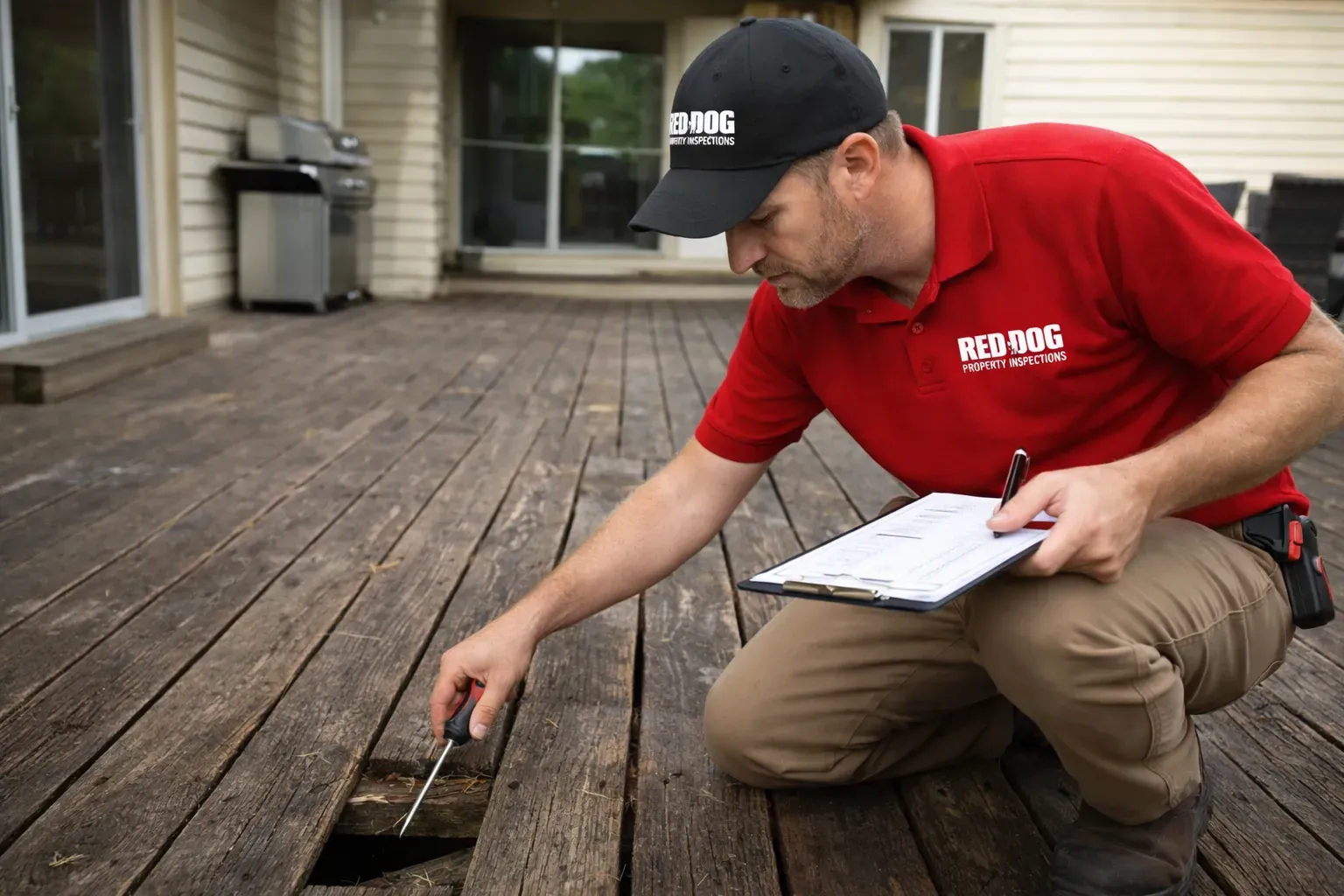
Outdoor decking provides a great space for relaxing, entertaining, and enjoying your backyard. However, because decks are constantly exposed to weather, moisture, and foot traffic, they require regular inspection and maintenance to remain safe and structurally sound.
Over time, timber can deteriorate, fixings can loosen, and drainage issues can cause damage that may not be immediately visible. Conducting an annual inspection of your deck helps identify early warning signs before they become expensive or hazardous problems.
Below are ten important areas homeowners should check to help ensure their outdoor decking remains safe and well maintained.
Decks are exposed to a combination of sun, rain, moisture, and temperature changes. These environmental factors can cause timber to expand, contract, crack, or decay. In addition, poor drainage, inadequate sealing, or incorrect construction methods can accelerate deterioration.
Many deck issues begin slowly and are not always obvious at first glance. What may start as a small crack or loose fixing can eventually affect the structural integrity of the deck if left unaddressed.
Regular inspections allow homeowners to identify minor problems early and carry out simple maintenance before more significant repairs are required.
When inspecting your outdoor deck, look for the following warning signs:
Splitting, warping, or rotting deck boards
Soft or spongy timber when pressed or probed
Mould, mildew, or algae growth on deck surfaces
Standing water or poor drainage around the deck area
Loose or protruding nails, screws, or fixings
Rusted metal connectors or brackets
Wobbly handrails or guardrails
Movement or instability when walking across the deck
Cracking or deterioration in support posts or beams
Evidence of insect activity in timber components
These signs may indicate underlying moisture issues, structural movement, or general deterioration due to age and exposure.
Ignoring early warning signs can lead to more serious problems over time.
Moisture intrusion is one of the most common causes of deck deterioration. When timber absorbs water repeatedly without adequate protection, it can swell, split, and eventually begin to rot. This weakens the material and can compromise structural components.
Loose fasteners or deteriorated connectors may also reduce the stability of the deck. Railings that feel loose or posts that shift under pressure can pose safety risks, particularly for children or when large groups are using the deck.
Mould and mildew growth may also create slippery surfaces, increasing the likelihood of slips and falls.
Addressing issues early typically results in simpler repairs, whereas long-term neglect can lead to significant structural work or full deck replacement.
When checking your deck, focus on these common problem areas:
1. Deck Boards
Check for splitting, warping, rot, and general wear.
2. Surface Protection
Confirm that sealant, stain, or protective coating is still effective.
3. Water Drainage
Ensure water drains away properly and does not pool on deck boards.
4. Fixings and Fasteners
Look for loose nails, screws, or rusted metal components.
5. Joists and Bearers
Inspect the framing beneath the deck for signs of rot or movement.
6. Ledger Board Connections
If the deck attaches to the house, confirm that the connection remains secure.
7. Support Posts
Check posts for cracking, movement, or deterioration at ground contact points.
8. Railings and Balustrades
Ensure handrails and balustrades are secure and compliant.
9. Stairs and Steps
Check for loose treads, uneven steps, or damaged stringers.
10. Subfloor Ventilation and Ground Conditions
Make sure air circulation and drainage beneath the deck are adequate to reduce moisture buildup.
If you notice problems during your deck inspection, taking practical steps early can help prevent further damage.
Inspect and identify the extent of the issue
Carefully check surrounding boards, framing, and connections to determine whether the problem is isolated or part of a larger concern.
Consult a qualified professional
A licensed carpenter, builder, or decking specialist can assess structural components and recommend the appropriate repairs.
Repair or rectify the problem
Replace damaged boards, tighten fixings, treat affected timber, or repair structural elements as required.
Prevent future issues
Apply protective sealants, improve drainage around the deck, maintain proper ventilation beneath the structure, and schedule regular maintenance inspections.
Routine maintenance can significantly extend the lifespan of your deck and help ensure it remains safe for everyday use.
While homeowners can identify many visible issues during routine checks, some problems occur beneath the surface or within structural components that are not easily accessible.
A professional property inspection can help identify hidden deterioration, structural concerns, moisture damage, or construction defects that may not be obvious during a casual inspection.
Deck issues often develop gradually, and by the time visible damage appears, underlying components may already be affected. Professional inspections help detect these early-stage problems and provide guidance on appropriate maintenance or repairs.
This approach helps protect both the safety of occupants and the long-term value of the property.
Outdoor decks are valuable extensions of the home, but they require ongoing care to remain safe and functional. A simple annual inspection focusing on key structural and maintenance areas can help identify issues early and reduce the likelihood of costly repairs.
At Red Dog Property Inspections, we frequently identify deck issues during property inspections that homeowners were unaware of. Many of these problems begin as minor maintenance concerns but can develop into safety or structural issues if left unattended.
Conducting an annual inspection of your deck helps identify early warning signs before they become expensive or hazardous problems.

Ready to book your inspection?
Get a fast, clear report from Registered Building Practitioners with 35+ years' experience.