
IR Cameras: Inspecting Roofs
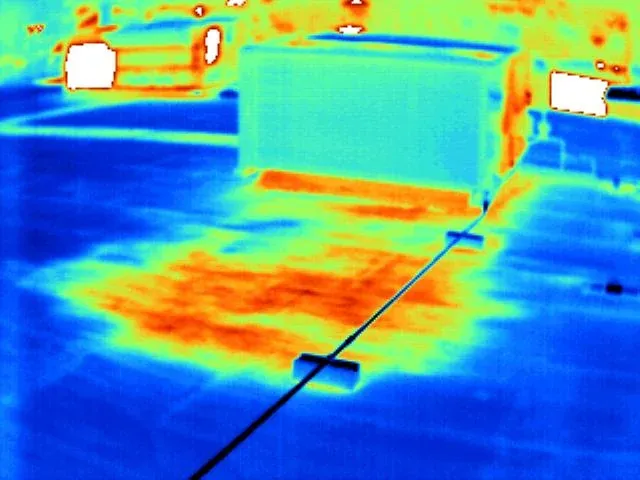
Since the 1970s, infrared (IR) thermography, or thermal imaging, has been used for inspecting flat and low-slope roofs to check for moisture entrapment. Employing IR cameras for home and commercial roof inspections is on the rise, with millions of square metres now being inspected using this technology every year.
Replacing damaged roofs can involve significant expense, often due to premature roof failure. The main causes of this are moisture intrusion and undetected wet insulation within the roofing system. Because thermal imaging makes temperature differences visible, it is particularly effective at identifying moisture and documenting problem areas during inspections.
Roof surfaces absorb heat during the day and release it as temperatures fall. Wet areas release heat more slowly than dry areas. As a result, these differences are visible in thermal images, which display temperature variations as gradient colours.
Advantages of Using IR Imaging for Roofs
Thermal imaging is non-invasive and allows inspectors to scan large areas efficiently. Traditional inspection methods often require a grid-style, contact-based approach, which can be time-consuming.
Using an infrared camera to locate moisture intrusion and wet insulation is generally faster and more efficient than many conventional methods. It can also help identify developing issues before more obvious symptoms appear, allowing for earlier intervention.
Thermal imaging can be conducted from elevated positions, enabling broader coverage without the need to physically access every section of the roof surface.
Key advantages include:
- Fast and efficient assessment of large roof areas
- Ability to identify smaller problem areas early
- Supports a thorough evaluation of compromised sections
- Lightweight and portable equipment
- Provides visual documentation for reporting
- Non-invasive method
- Suitable for routine maintenance inspections
Limitations and Considerations
There are some limitations to thermal imaging that should be understood. The effectiveness of IR inspections depends largely on the roof’s composition and the environmental conditions at the time of inspection.
Certain roofing materials and construction types can make interpretation more difficult. In addition, external factors such as weather conditions can significantly influence the accuracy of results.
Weather Conditions
Although the principles of thermal imaging remain consistent, roof inspections are more affected by environmental conditions than internal inspections. For this reason, inspections should be carried out under suitable conditions to obtain reliable data.
Four key factors influence how effectively moisture can be detected:
- The temperature difference between the interior and exterior
- The rate of temperature change prior to inspection
- The amount of solar exposure (solar loading)
- Wind speed
Optimal conditions for thermal roof inspections typically include:
- Wind speeds below approximately 15 mph
- Clear and sunny conditions prior to inspection
- A noticeable drop in ambient temperature before imaging
In warmer conditions, solar loading during the day creates temperature differences, and inspections are often most effective around dusk. In cooler months, creating a temperature difference between the inside and outside of the building can assist in identifying affected areas.
Roofing-Covering Materials
Understanding the composition of the roof is important when using thermal imaging. Different materials respond differently to heat and can affect how clearly moisture is detected.
Most common roofing and insulation materials can be assessed effectively using IR technology. These include materials such as fibreglass, polystyrene, polyurethane, and various composite boards.
However, some roof types are less suitable for thermal imaging. These may include:
- Inverted roof membrane systems with insulation above the membrane
- Roofs with concrete pavers
- Lightweight concrete or gypsum-based systems
- Highly reflective metal roofing
While thermal imaging may still be used in these situations, interpretation can be more complex and may require additional verification methods.
Inspection Tips
A visual inspection should always be carried out prior to thermal imaging. This helps identify access points, safety considerations, and any visible defects that may influence the inspection process.
Inspecting the roof void or underside of the roof can also provide useful context, including identifying heat sources or existing moisture issues that may appear in thermal images.
Understanding the roof’s design, materials, and any known history of issues can assist in determining the most effective inspection approach. Particular attention should be given to flashings and penetrations, as these are common points of moisture entry.
During the inspection, the IR camera is used to scan large sections of the roof. Viewing angles greater than 20 degrees from the surface are generally preferred. Areas showing temperature variation are then examined more closely.
Where anomalies are identified, they should be verified using a moisture meter or further investigation. Thermal images are typically documented alongside standard photographs and included in the inspection report. Marking identified areas can also assist with locating them later during repair planning.
At Red Dog Property Inspections, thermal imaging is used as part of a broader, methodical inspection process. It allows for efficient assessment of roof areas and can assist in identifying moisture-related concerns that may not be visible during a standard visual inspection.
Importantly, thermal imaging is not relied upon in isolation. Findings are interpreted in context, supported by visual assessment and, where required, further testing to confirm conditions.
If you’re concerned about the condition of your roof or would like a professional assessment, contact Red Dog Property Inspections. We’re here to help ensure your property remains safe, compliant, and well maintained.
Ready to book your inspection?
Get a fast, clear report from Registered Building Practitioners with 35+ years' experience.