
How to Tell If a House Needs to Be Re-Stumped
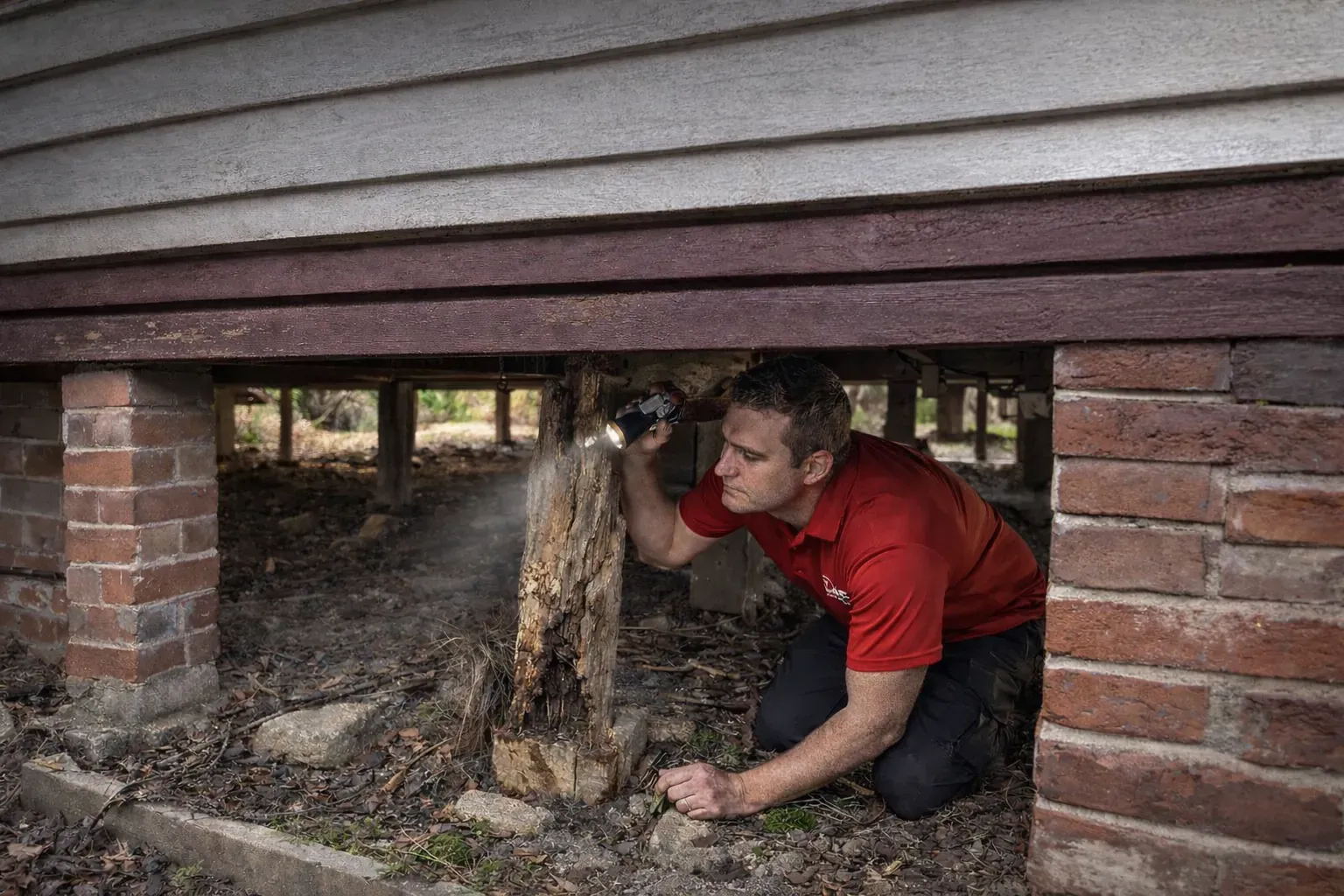
In many Australian homes, particularly older weatherboard properties, the house sits on timber or concrete stumps. Over time, these stumps can deteriorate, shift or subside, leading to movement throughout the home.
At Red Dog Property Inspections, we’re often asked: “How do I know if the house needs re-stumping?” While a proper inspection is the only way to be certain, there are some common signs you can look out for.
Why Stumps Deteriorate
In most cases, the perimeter stumps around the outside of the dwelling are the first to deteriorate. They are directly exposed to moisture from garden beds, lawns and poor drainage, which can keep the soil damp and unstable.
As perimeter stumps begin to give way, they place additional load on adjacent stumps. Over time, this can lead to widespread movement under the home. Once movement starts, it rarely affects just one area. It tends to show up throughout the dwelling.
Signs a House May Need Re-Stumping
Here are some checks you can perform without going under the floor.
\1. Doors and Windows Out of Alignment
Look closely at door and window openings.
Do doors swing open or closed on their own?
Do they stick or rub on the frame?
Are there visible gaps at the top or bottom?
Movement in the subfloor often shows up first in door and window frames.
\2. Cracking Around Openings
Check for cracking in plaster around doors and windows. Diagonal cracks can indicate structural movement rather than simple cosmetic settling.
\3. Cracks in External Brickwork
Walk around the perimeter of the house and inspect the brickwork. Step cracks or separation in mortar joints can be a sign of movement in the foundation system.
\4. Uneven or Sloping Floors
Stand in the middle of a room and see if you can feel any bounce or slope. You can also place a marble on the floor to see if it rolls. While some minor unevenness can be normal in older homes, noticeable movement warrants further investigation.
\5. Gaps Between Walls and Floors
Look for gaps forming between skirting boards and flooring, or between walls and ceilings. These can develop when parts of the home settle unevenly.
What Causes the Movement?
Common causes in Australian conditions include:
Rotten or termite-affected timber stumps
Rusted steel stumps
Poor drainage or leaking plumbing
Reactive clay soils expanding and contracting
Inadequate original footing depth
It is always worth asking the real estate agent whether the house has been re-stumped or underpinned. If it has, request documentation. However, it is important not to rely solely on verbal assurances. Proper inspection and evidence are key.
While surface signs can indicate a problem, the real condition of the stumps can only be assessed by getting under the house.
During a building inspection, we check:
Condition and material of stumps
Signs of rot, rust or termite damage
Level of the subfloor
Packing and support adequacy
Drainage and ventilation
Early identification can save significant costs down the track. Re-stumping is a major expense, and understanding the extent of work required is crucial before committing to a purchase.
No house is completely movement free, particularly older properties. The key is determining whether the movement is minor and typical for its age, or whether it indicates structural issues requiring re-stumping.
If you are buying, selling or simply concerned about movement in your home, a thorough building inspection can provide clarity and confidence.
At Red Dog Property Inspections, we take the time to properly assess subfloor conditions and explain what our findings mean in plain English so you can make informed decisions.
If you would like peace of mind before your next purchase, get in touch with our team.

Ready to book your inspection?
Get a fast, clear report from Registered Building Practitioners with 35+ years' experience.