
Household Explosion Risks
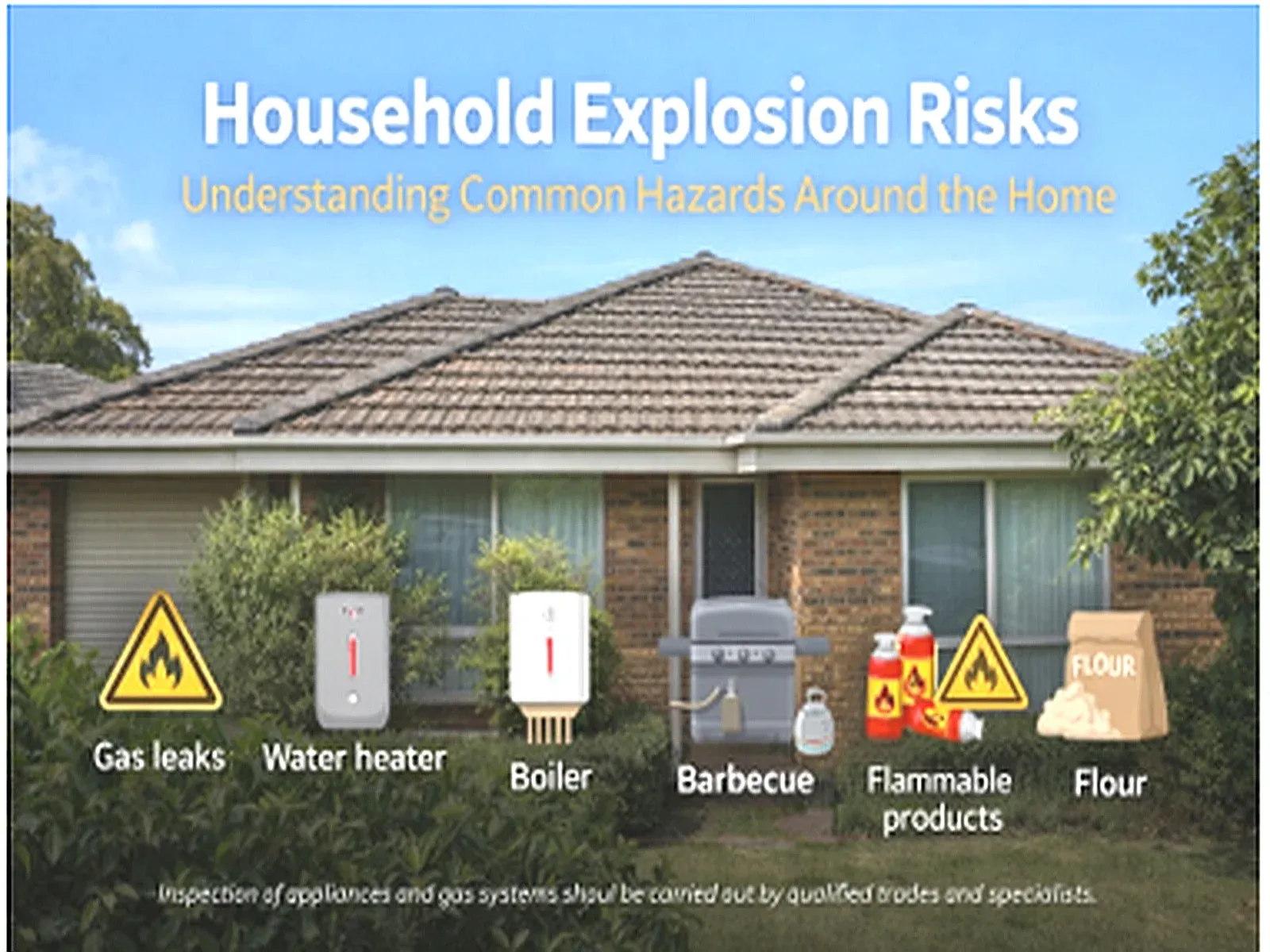
While most property concerns relate to general wear and maintenance, some household risks although uncommon can have serious consequences if overlooked. In Australian homes, certain everyday systems and materials can create explosive or high-pressure situations if they are not properly maintained or handled.
Gas leaks are among the most serious hazards. Natural gas and LPG systems are commonly used for cooking, heating, and hot water. While incidents are rare, gas can build up in enclosed spaces and ignite if exposed to a spark. Homeowners should be familiar with the smell of gas and ensure all gas appliances are regularly serviced by a licensed gas fitter. If a leak is suspected, it’s safest to leave the property immediately and avoid using any electrical switches or devices.
Hot water systems especially storage tanks can also pose a risk if pressure or temperature is not properly controlled. These systems rely on pressure and temperature relief valves to operate safely. Over time, these components can wear out or fail, increasing the risk. Regular servicing by a qualified plumber helps ensure these safety features remain functional.
Heating systems, including boilers and ducted units, should be treated the same way. Because they operate under heat and pressure, routine servicing by licensed professionals is essential to keep them running safely.
Outdoor gas appliances, such as barbecues, are another common source of risk. Faulty hoses, loose connections, or damaged gas bottles can allow gas to escape and ignite. Simple precautions like checking connections, storing cylinders correctly, and avoiding damaged equipment can significantly reduce this risk.
Many household products are also flammable. Cleaning solvents, aerosols, fuels, and insect sprays can release vapours that may ignite under certain conditions. These items should always be stored in cool, well-ventilated areas and kept away from ignition sources like pilot lights, electrical equipment, or open flames.
Glass containers can fail unexpectedly due to pressure or sudden temperature changes. Using glassware incorrectly such as placing it directly on stovetops or into freezers can cause breakage or even sudden shattering. Always check that glass is suitable for the intended use and avoid rapid temperature changes.
Even everyday kitchen materials can pose a hazard. Fine particles like flour dust are highly combustible when dispersed in the air. While this is more common in industrial settings, similar conditions can occur at home if flour is handled near open flames or gas cooktops.
In most cases, these risks are manageable with awareness and regular maintenance. The key is ensuring that specialised systems such as gas, plumbing, and heating are inspected and serviced by qualified professionals rather than overlooked over time.
During a property inspection, general safety observations may be noted. However, it’s important to understand that gas appliances, hot water systems, and similar equipment require detailed assessment by licensed specialists. Keeping these systems properly maintained plays a vital role in reducing risk within the home.
If you’re concerned about the overall condition of your property or how different elements may impact safety, Red Dog Property Inspections can help. Our team provides clear, practical insights to help keep your home safe, compliant, and well maintained.

Ready to book your inspection?
Get a fast, clear report from Registered Building Practitioners with 35+ years' experience.