
Filtering Your Tap Water
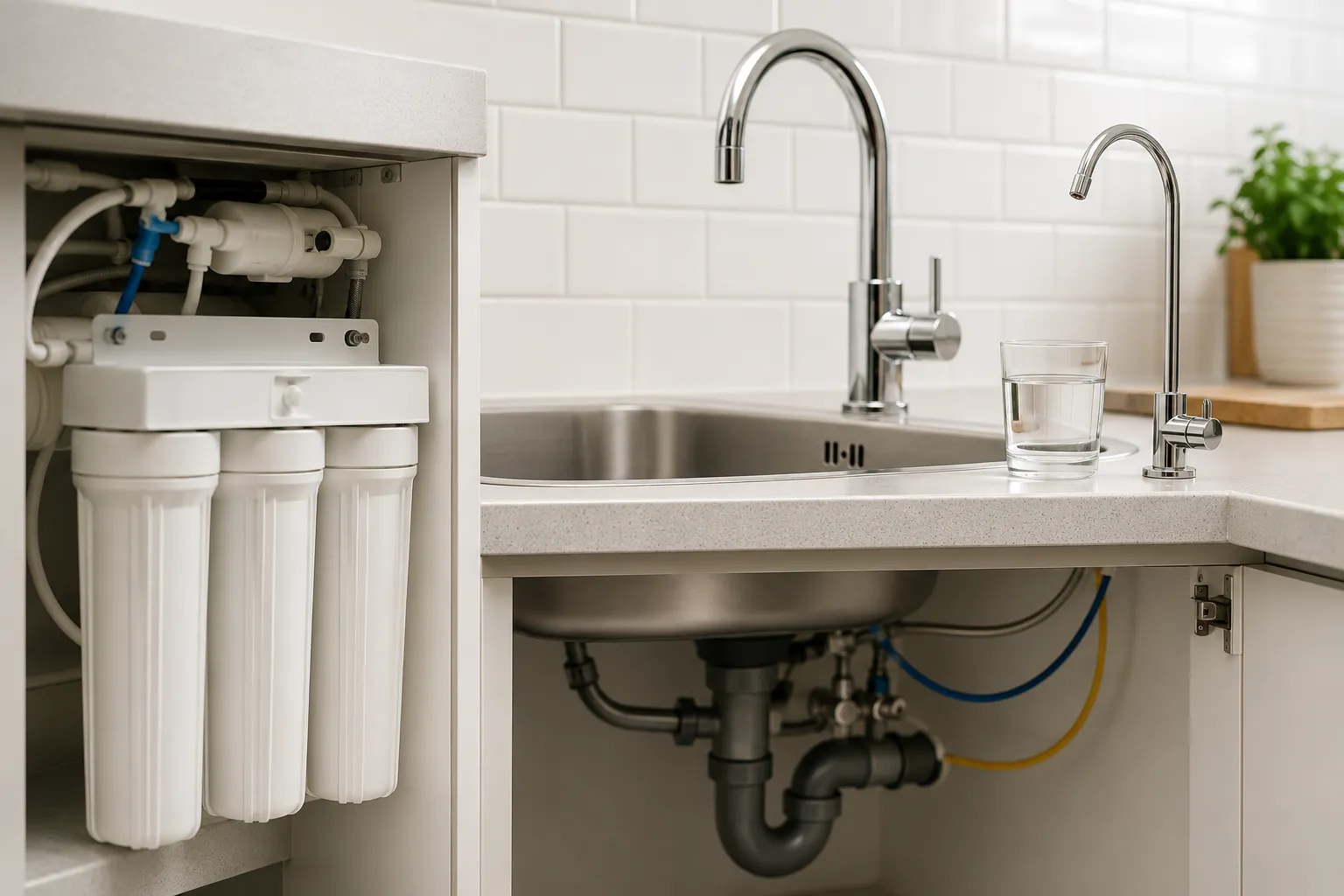
Water is a fundamental part of how every home functions, yet it is something many homeowners rarely think about until a concern arises. During property inspections, plumbing systems are assessed for their visible condition and operation, and we are increasingly seeing water filtration systems installed in both new and established homes.
In Australia, mains drinking water is treated and monitored by the relevant water authorities. However, the water that eventually reaches your kitchen tap also travels through the property's own plumbing system. The age, condition and type of internal pipework can therefore be relevant when considering the water supply within an individual home.
Older plumbing systems may show signs of corrosion, sediment build-up or deterioration. Homeowners may also notice changes in the taste, odour, colour or clarity of their water. These observations do not necessarily mean the water is unsafe, but they can be an indication that further investigation of either the water supply or plumbing system may be worthwhile.
For some homeowners, water filtration is simply a personal preference aimed at improving the taste or smell of drinking water. For others, filtration may be considered because of concerns about sediment, chlorine or particular contaminants. The important thing to understand is that different filtration systems are designed to address different things, so there is no single filter that is necessarily suitable for every property or every concern.
Simple filtration options include water filter jugs and tap-mounted filters. These can provide a relatively inexpensive and convenient option for drinking water, although their capacity is limited and filters need to be replaced at the manufacturer's recommended intervals to remain effective.
Under-sink filtration systems provide a more permanent solution. These are generally connected to the cold-water supply beneath the kitchen sink and may supply a separate filtered-water tap or be incorporated into a suitable mixer. Depending on the system, multiple filtration stages may be used to target sediment, taste, odour or other substances.
Whole-of-house filtration systems take the process a step further by treating water as it enters the property before it is distributed to fixtures throughout the home. These systems can provide filtration beyond drinking water, but they also require appropriate selection, installation and ongoing maintenance.
Where a filtration system is connected directly to the home's water supply, installation should be undertaken in accordance with applicable plumbing requirements and the manufacturer's instructions. Incorrect installation can potentially result in leaks, reduced water pressure, poor performance or other plumbing issues.
Maintenance is equally important. A filtration system is not something that should simply be installed and forgotten. Filter cartridges have a limited service life and require replacement at specified intervals. A system that has not been maintained may become less effective, restrict water flow or potentially create other water-quality concerns.
From a property inspection perspective, an installed filtration system is considered as part of the overall plumbing installation where it is visible and accessible. We may identify signs of leakage, corrosion, poor installation, damaged components or other visible defects that warrant further attention. However, a standard property inspection does not determine the quality of the drinking water or confirm the effectiveness of the filtration media.
It is also important to recognise that filtration does not rectify defects within the plumbing system itself. If there are deteriorated pipes, leaks, inappropriate connections or other plumbing defects, installing a filter does not remove the need to investigate and rectify the underlying problem.
If there is a specific concern about drinking-water quality, appropriate water testing can provide considerably more useful information than simply selecting a filter without first understanding the issue. The results can then help determine whether filtration is necessary and, if so, what type of system may be appropriate.
Water filtration can be a useful addition to a home when it is properly selected, correctly installed and regularly maintained. Like many building services, however, it should be considered as one part of the overall plumbing system rather than a solution to every water-related concern.
If you're concerned about the condition of the plumbing within your home or you're purchasing a property with an existing filtration system, Red Dog Property Inspections can help identify visible plumbing defects and areas that may warrant further investigation.

Ready to book your inspection?
Get a fast, clear report from Registered Building Practitioners with 35+ years' experience.