
Delamination of Cabinet Materials
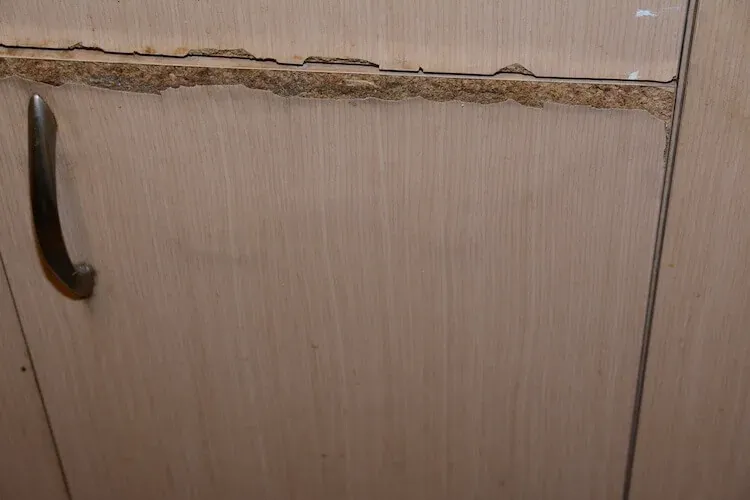
Cabinetry is an essential component of many homes, providing crucial storage and functionality.
However, over time, cabinets can experience issues such as delamination, which can affect both their appearance and performance.
At Red Dog Property Inspections, we often encounter this issue, and we want to help homeowners understand what delamination is, how it occurs, and what steps can be taken to address it.
What is Delamination?
Delamination refers to the separation of layers in composite materials, commonly seen in cabinet laminates. This condition typically occurs due to water penetration or the presence of excessive moisture, which deteriorates the adhesive that bonds the layers together. Cabinets, especially in areas with higher humidity, are particularly susceptible to this type of damage.
Signs of Delamination
Property owners may notice several signs indicating that delamination is occurring, including:
- Warped or bubbling surfaces
- Gaps between the layers of laminate
- Peeling edges or corners of cabinet doors and panels
Repairing Delaminated Cabinets
If you discover minor delamination, it may be possible to perform a temporary repair. Here are some steps to consider:
- Gluing Layers Together: For small and easily accessible affected areas, you can use a strong adhesive to press the layers back together. This quick fix can keep cabinets functional while you plan for more extensive repairs.
- Monitoring for Additional Damage: After a temporary fix, it’s important to continue monitoring the cabinets for any further signs of delamination or moisture intrusion, as ongoing issues may require more significant action.
Planning for Replacement
While minor repairs can serve as an interim solution, it’s crucial for homeowners to plan for the eventual replacement of affected cabinets. Here are some key considerations:
- Consult a Professional: Engage a cabinet maker or a qualified carpenter to assess the extent of the delamination and provide cost estimates for both repair and replacement options.
- Prevent Future Issues: To reduce the risk of delamination, consider improving moisture control in areas where cabinetry is installed. This might include regular inspection of plumbing for leaks and ensuring proper ventilation to manage humidity levels.
Conclusion
Delamination of cabinet materials can lead to both functional and aesthetic concerns in your home.
While minor repairs can provide a temporary solution, planning for replacement is essential to maintain the integrity of your cabinetry.
At Red Dog Property Inspections, we encourage homeowners to stay proactive in addressing these issues. If you have questions about the condition of your cabinets or need guidance during inspections, reach out to us.
Our team is committed to helping you keep your home safe and well-maintained!
Ready to book your inspection?
Get a fast, clear report from Registered Building Practitioners with 35+ years' experience.